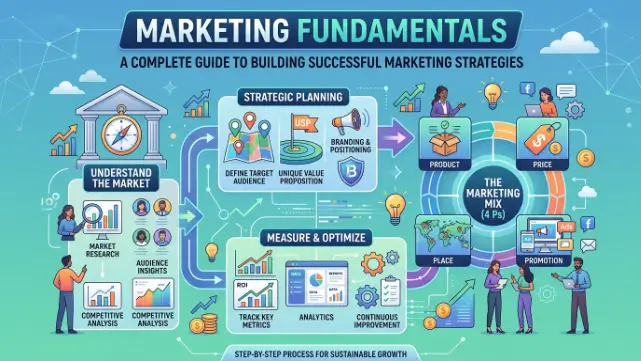
Marketing is one of the most important functions of any business. Whether you run a small startup, a local shop, or a global company, understanding marketing fundamentals can help you attract customers, build strong relationships, and increase sales. While marketing has evolved significantly with the rise of digital platforms, the core principles remain the same.
At its heart, marketing is about understanding customer needs and delivering value. Businesses that master marketing fundamentals are better positioned to stand out in competitive markets and create long-term success.
In this comprehensive guide, we will explore the essential marketing fundamentals, explain key concepts, discuss proven strategies, and provide practical examples that anyone can understand.
What Are Marketing Fundamentals?
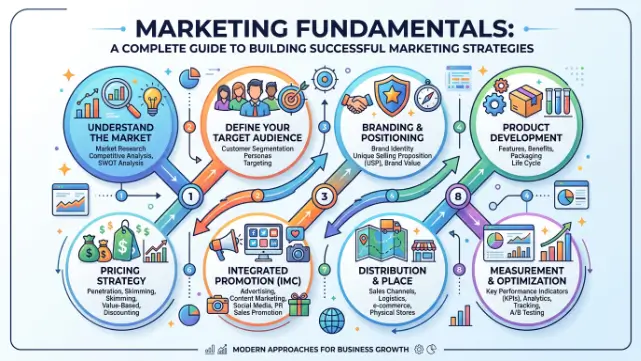
Marketing fundamentals are the basic principles and concepts that guide how businesses promote products and services to customers. These principles help companies understand their target audience, communicate effectively, and create value that encourages people to buy.
The goal of marketing is not simply to sell products. Instead, it focuses on building meaningful connections between businesses and customers.
Marketing fundamentals include:
- Understanding customer needs
- Identifying target markets
- Creating valuable products or services
- Developing effective pricing strategies
- Choosing the right promotional methods
- Building customer relationships
When these elements work together, businesses can achieve sustainable growth and customer loyalty.
Why Marketing Fundamentals Matter
Many businesses fail because they focus only on their products and ignore customer needs. Marketing fundamentals help organizations understand what customers want and how to meet those expectations.
Key Benefits of Understanding Marketing Fundamentals
- Improved customer satisfaction
- Increased brand awareness
- Better sales performance
- Stronger customer loyalty
- More efficient use of marketing budgets
- Competitive advantage
Companies that understand marketing fundamentals can make smarter decisions and adapt more effectively to changing market conditions.
Understanding the Marketing Process
Marketing is not a one-time activity. It is an ongoing process that involves several important stages.
Step 1: Research the Market
Successful marketing begins with research.
Businesses need to understand:
- Customer preferences
- Buying behavior
- Market trends
- Competitor activities
- Industry developments
Research provides valuable insights that guide marketing decisions.
Example
A coffee shop planning to introduce a new beverage may conduct surveys to learn which flavors customers prefer. This information helps reduce risk and improve product success.
Step 2: Identify the Target Audience
Not every product appeals to everyone.
One of the most important marketing fundamentals is identifying a specific audience.
Target audiences can be defined by:
Demographics
- Age
- Gender
- Income
- Education
Geographic Factors
- Country
- City
- Region
Psychographics
- Interests
- Lifestyle
- Values
Behavioral Factors
- Purchasing habits
- Brand loyalty
- Product usage
Knowing the target audience allows businesses to create more relevant marketing messages.
Step 3: Create Value
Customers buy products because they solve problems or fulfill needs.
A successful marketing strategy focuses on the value offered rather than simply promoting features.
For example:
Instead of saying a smartphone has a large battery, marketers emphasize that users can enjoy all-day usage without frequent charging.
Value helps customers understand why they should choose one product over another.
The Four Ps of Marketing
One of the most recognized marketing fundamentals is the concept known as the Four Ps.
These elements form the foundation of many marketing strategies.
1. Product
The product is what the business offers to customers.
A product can be:
- Physical goods
- Services
- Digital products
- Subscriptions
Questions to Consider
- What problem does it solve?
- What makes it unique?
- How does it benefit customers?
Successful products meet real customer needs.
2. Price
Pricing affects customer perception and purchasing decisions.
Businesses must find the right balance between profitability and affordability.
Common Pricing Strategies
- Competitive pricing
- Premium pricing
- Penetration pricing
- Value-based pricing
The right pricing strategy depends on the target market and business objectives.
3. Place
Place refers to how products reach customers.
Distribution channels may include:
- Retail stores
- E-commerce websites
- Marketplaces
- Direct sales
Customers expect convenience, making distribution a critical part of marketing fundamentals.
4. Promotion
Promotion involves communicating with potential customers.
Promotional activities may include:
- Advertising
- Public relations
- Email campaigns
- Social media marketing
- Content creation
The goal is to increase awareness and encourage action.
Understanding Consumer Behavior
Consumer behavior examines how people make purchasing decisions.
Studying consumer behavior is one of the most important marketing fundamentals because it helps businesses understand why customers buy certain products.
Factors Influencing Buying Decisions
Personal Factors
- Income
- Age
- Occupation
Psychological Factors
- Motivation
- Perception
- Beliefs
Social Factors
- Family
- Friends
- Social groups
Cultural Factors
- Traditions
- Values
- Lifestyle preferences
Businesses that understand consumer behavior can create more effective marketing strategies.
Building a Strong Brand
A brand is more than a logo or company name.
It represents how customers perceive a business.
Elements of a Strong Brand
- Consistent messaging
- Unique identity
- Clear values
- Positive customer experiences
Strong brands create trust and recognition.
Examples of Strong Branding
Well-known companies invest heavily in branding because it influences customer loyalty and purchasing decisions.
A recognizable brand often enjoys higher customer retention rates compared to lesser-known competitors.
Market Segmentation
Market segmentation involves dividing a broad audience into smaller groups with similar characteristics.
This allows businesses to create personalized marketing campaigns.
Types of Segmentation
Demographic Segmentation
Based on:
- Age
- Gender
- Income
- Education
Geographic Segmentation
Based on:
- Country
- Climate
- Region
Behavioral Segmentation
Based on:
- Purchase history
- Product usage
- Loyalty levels
Psychographic Segmentation
Based on:
- Interests
- Values
- Lifestyle
Segmentation improves marketing effectiveness by ensuring messages reach the right audience.
The Importance of Customer Relationships
One of the most valuable marketing fundamentals is relationship building.
Acquiring new customers often costs more than retaining existing ones.
Benefits of Customer Loyalty
- Repeat purchases
- Positive reviews
- Referrals
- Higher lifetime value
Businesses can strengthen relationships through:
- Excellent customer service
- Personalized communication
- Loyalty programs
- Consistent quality
Happy customers often become brand advocates.
Digital Marketing and Modern Fundamentals
While marketing fundamentals remain unchanged, digital tools have transformed how businesses reach customers.
Popular Digital Marketing Channels
Social Media
Platforms help businesses engage with audiences directly.
Benefits include:
- Brand awareness
- Community building
- Customer interaction
Email Marketing
Email remains one of the most effective communication channels.
Advantages include:
- Personalization
- Cost efficiency
- High return on investment
Content Marketing
Creating useful content helps businesses educate and engage audiences.
Examples include:
- Blog articles
- Videos
- Guides
- Infographics
Content builds trust and authority.
Marketing Metrics and Measurement
Successful marketers track performance.
Measuring results helps businesses understand what works and what needs improvement.
Important Marketing Metrics
- Website traffic
- Conversion rate
- Customer acquisition cost
- Customer retention rate
- Return on investment
- Engagement rate
Data-driven decisions lead to better outcomes.
Common Marketing Mistakes to Avoid
Even experienced marketers make mistakes.
Understanding common errors can help businesses improve.
1. Ignoring Customer Needs
Marketing should focus on customer problems rather than company preferences.
2. Lack of Research
Making assumptions without research often leads to poor decisions.
3. Inconsistent Branding
Mixed messages can confuse customers.
4. Neglecting Customer Feedback
Customer feedback provides valuable insights for improvement.
5. Focusing Only on Sales
Long-term relationships are often more valuable than short-term transactions.
Marketing Fundamentals for Small Businesses
Small businesses can benefit greatly from mastering marketing fundamentals.
Practical Tips
- Define a clear target audience.
- Focus on customer satisfaction.
- Build a recognizable brand.
- Use affordable marketing channels.
- Measure results regularly.
Small businesses that consistently apply these principles often outperform larger competitors in niche markets.
The Future of Marketing
Marketing continues to evolve with technology.
Emerging trends include:
- Artificial intelligence
- Personalization
- Voice search
- Automation
- Data analytics
Despite these advancements, the core marketing fundamentals remain unchanged.
Businesses must still:
- Understand customers
- Deliver value
- Build trust
- Communicate effectively
Technology simply provides new tools to achieve these goals.
Real-World Example of Marketing Fundamentals in Action
Imagine a local fitness center launching a new membership program.
They begin by researching customer needs and discovering that many people want flexible workout schedules.
Next, they identify their target audience:
- Young professionals
- Busy parents
- Health-conscious individuals
They develop a membership package that offers convenience and affordability.The gym promotes the program through social media, email campaigns, and referral incentives.Finally, they track membership growth and customer satisfaction.This example demonstrates how marketing fundamentals work together to create successful outcomes.
Final Thoughts
Understanding marketing fundamentals is essential for any business that wants to grow, attract customers, and remain competitive. While marketing channels and technologies continue to change, the basic principles remain timeless.
Successful marketing starts with understanding customers, identifying their needs, creating value, and communicating effectively. Businesses that master these fundamentals can build stronger brands, increase customer loyalty, and achieve long-term success.
Whether you are a business owner, student, entrepreneur, or marketing professional, investing time in learning marketing fundamentals will provide valuable skills that can benefit you throughout your career. By focusing on customer needs, building meaningful relationships, and continuously improving your strategies, you can create marketing efforts that deliver lasting results.